A Tech Bite from Greener Technical Service Manger Jeff Fouche
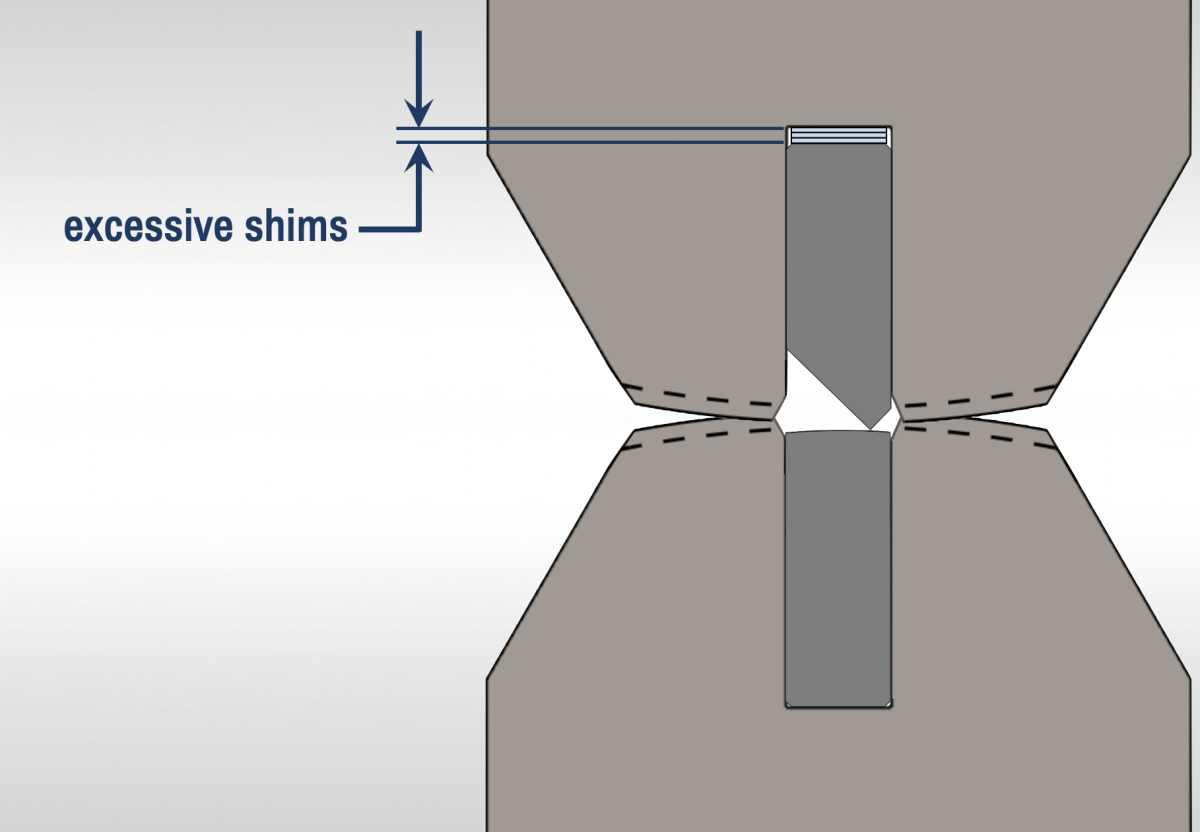
At times a client inquires why they need so much shim to get a new knife to cut on their flow wrapper or rotary vertical bagger, and our Technical Specialists have encountered this same issue during service visits. Excessive shimming of knives causes cutting problems that delay production, reduce knife and anvil life, and create sealing troubles.
This Greener Tech Bite identifies the optimal limits for shim thickness when adjusting knives and explains the reasons why excess shims may be required to get a knife to cut.
How Much Shim Should Be Required?
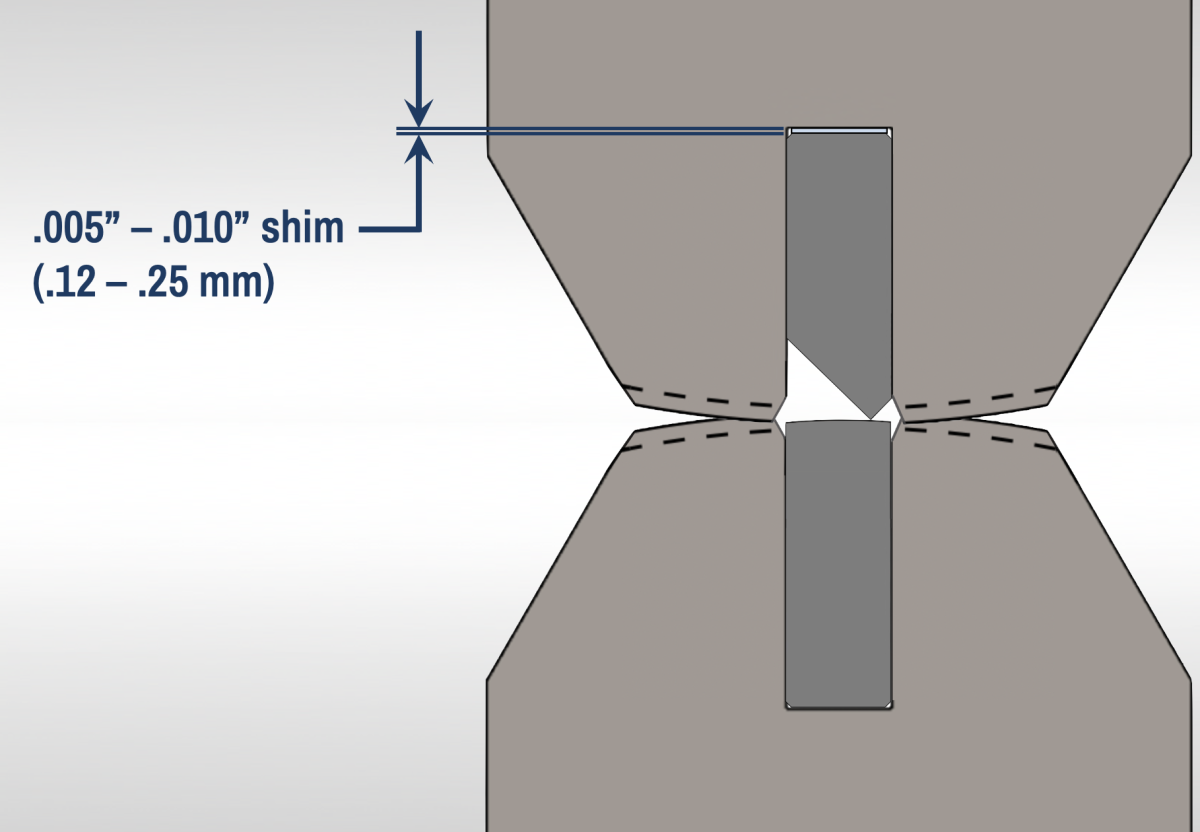
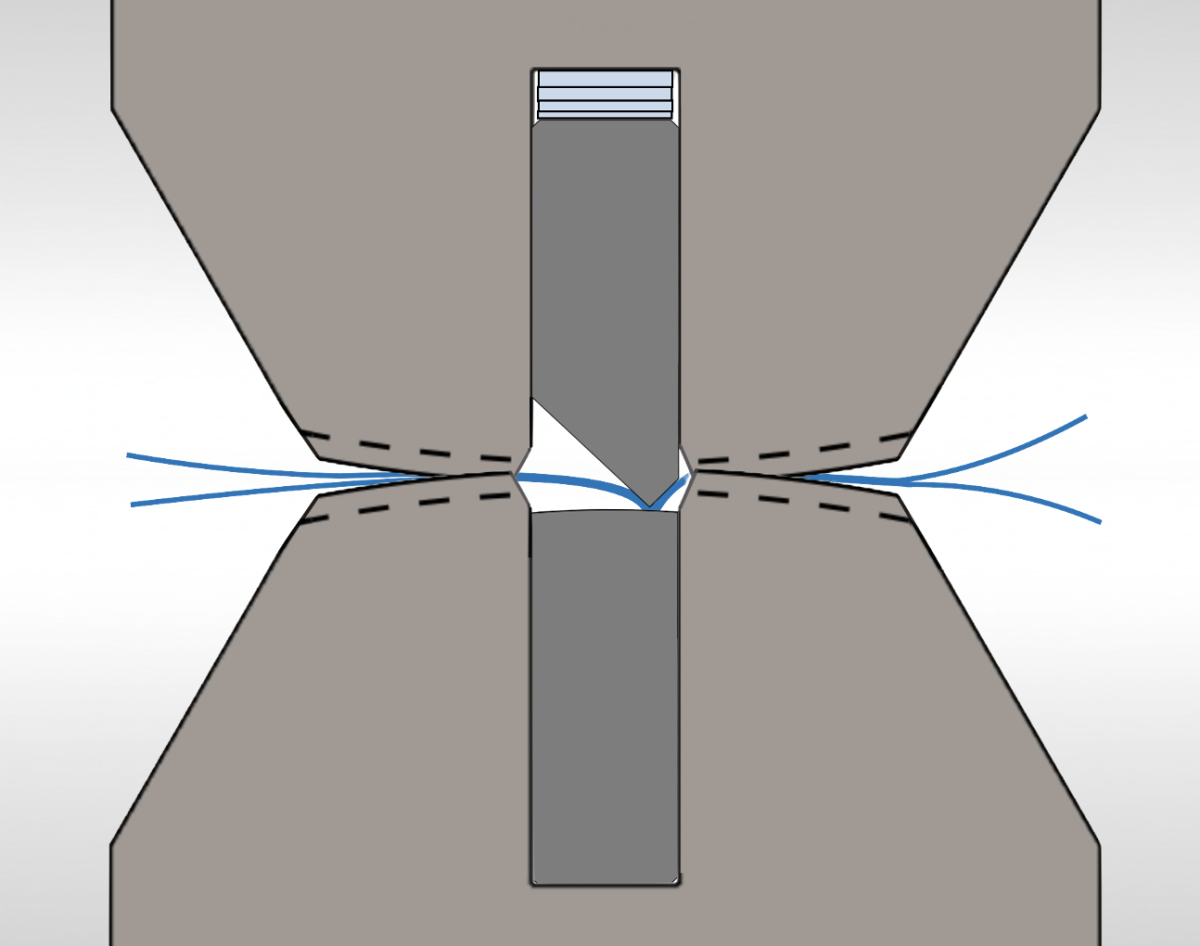
Greener Corporation sets and holds tight manufacturing tolerances on sealing jaws, knives, and anvils, so that the knife and anvil extend between the root and the mid-point of the serrations. The anvil does not require adjustment, and shims totaling no more than five to ten thousandths of an inch, or .12 to .25 millimeters, should be needed when setting up a new knife.
Problems Caused by Excessive Shims
Instability
With greater amounts of shim, the base under the knife becomes less solid and unstable.
Overadjustment
To overcome this instability the knife must be overadjusted to achieve the force necessary to cut against the anvil.
Premature Failure of Knives and Other Components
The heavy impact of an overadjusted knife—often conspicuous by the banging sound it makes as it strikes the anvil—causes knives, sealing jaws, springs, bearings, and other critical components to fail prematurely, increasing both downtime and spare part costs.
Poor Seal Quality
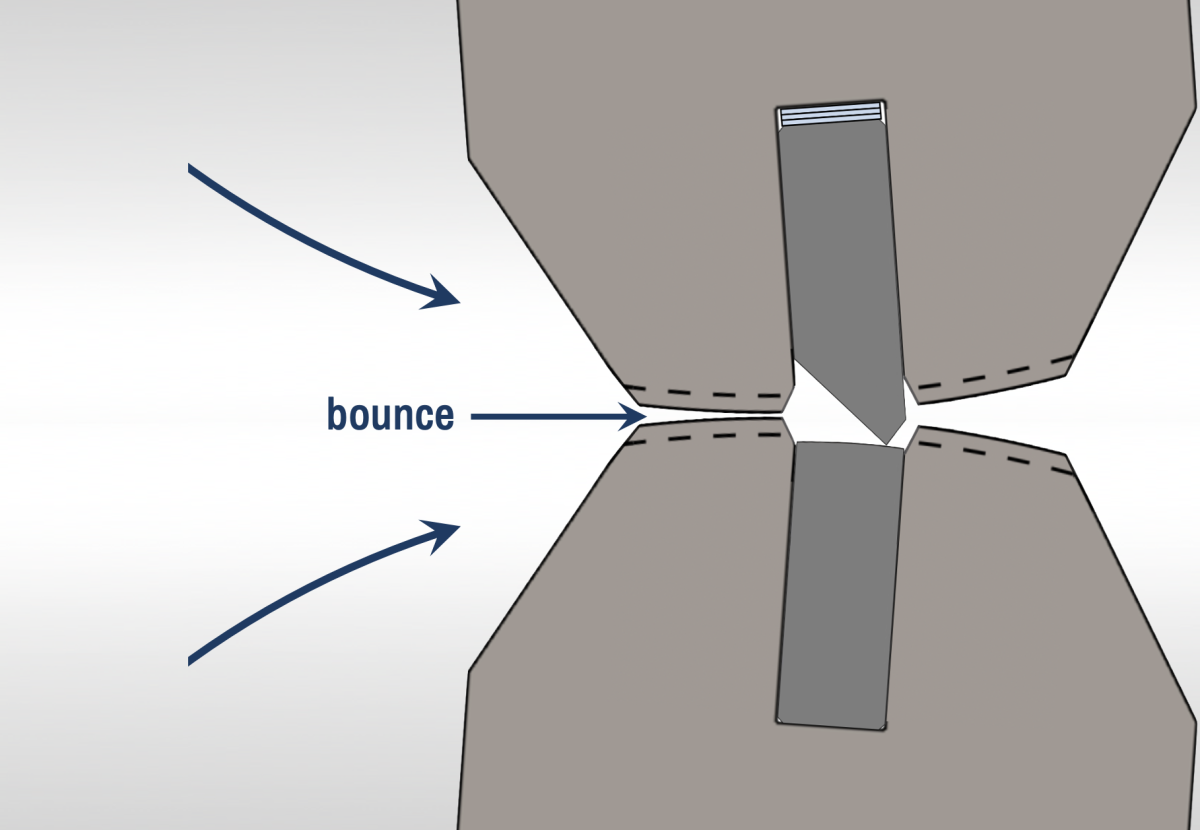
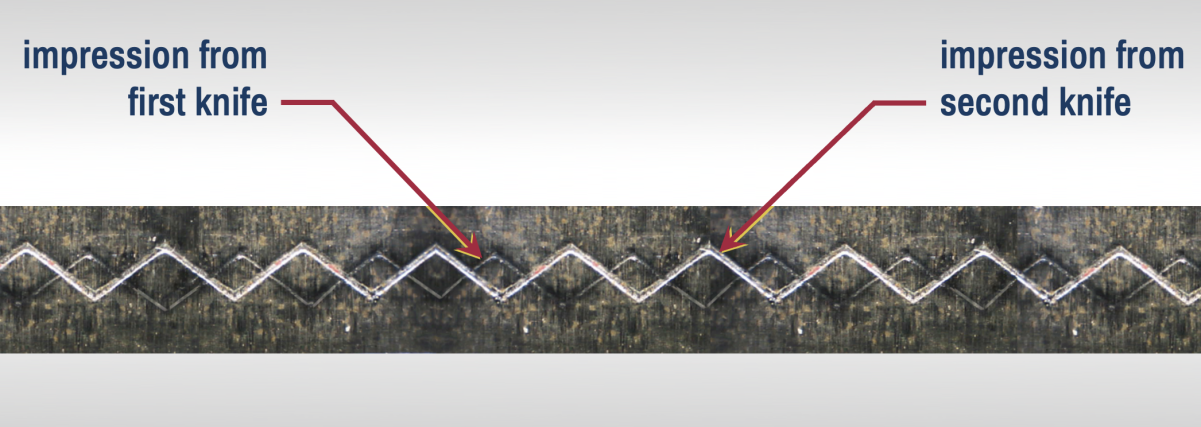
Overadjusted knives also create sealing problems, where the impact of the knife causes the sealing jaws to bounce apart, reducing the sealing pressure and seal quality on the leading end of the next package.
8 Conditions That Create the Need for Excessive Shims
1. The Knife and Anvil Are Worn and Need to be Replaced
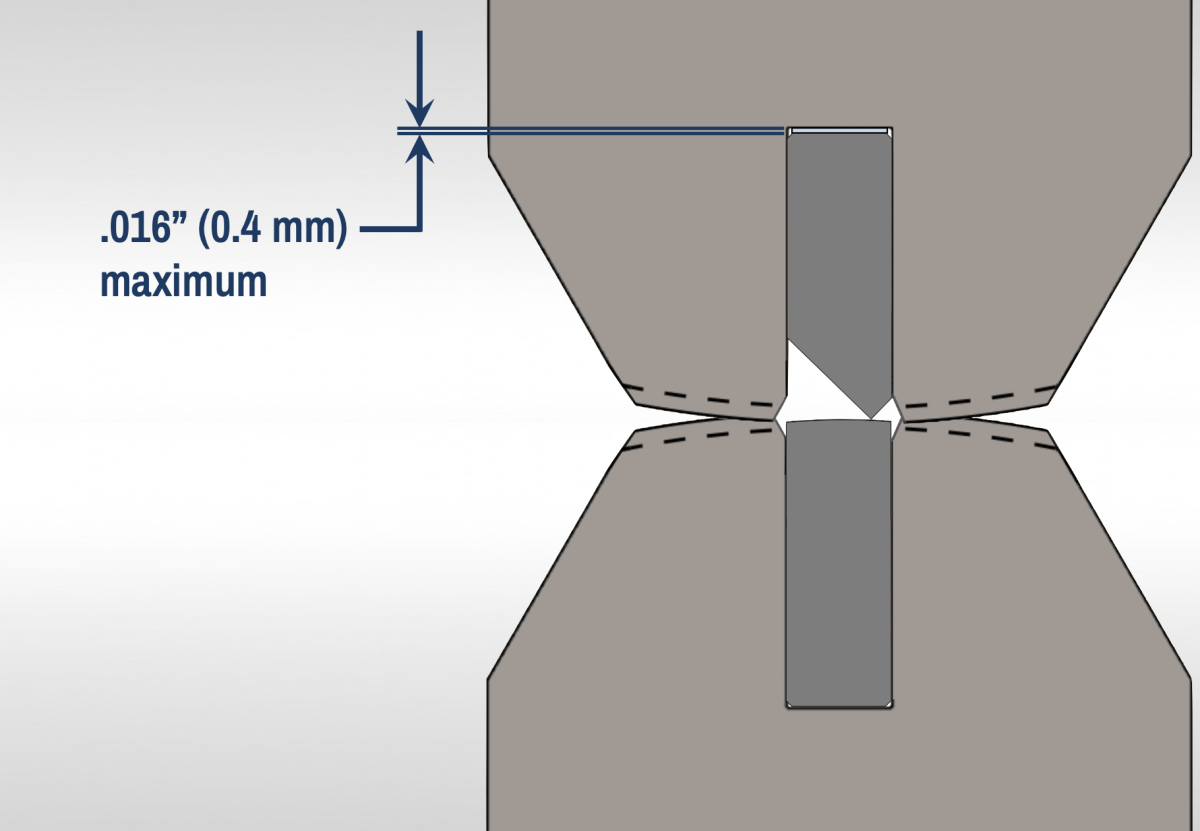
When running sealing jaws, knives, and anvils from Greener, if a total shim thickness of more than fifteen or sixteen thousandths of an inch, or .38 to .4 millimeters, is needed under the knife, then a new knife and anvil should be installed.
2. A New Knife Was Installed With the Old, Used Anvil
With this practice, much greater force is required to achieve a cut and knife life can be reduced up to 50%.
3. Springs or Compression Washers Are Worn or Too Weak
Shims with burrs on their edges, or shims made from brass or another soft material, are flattening and compressing over time and failing to properly support the knife.
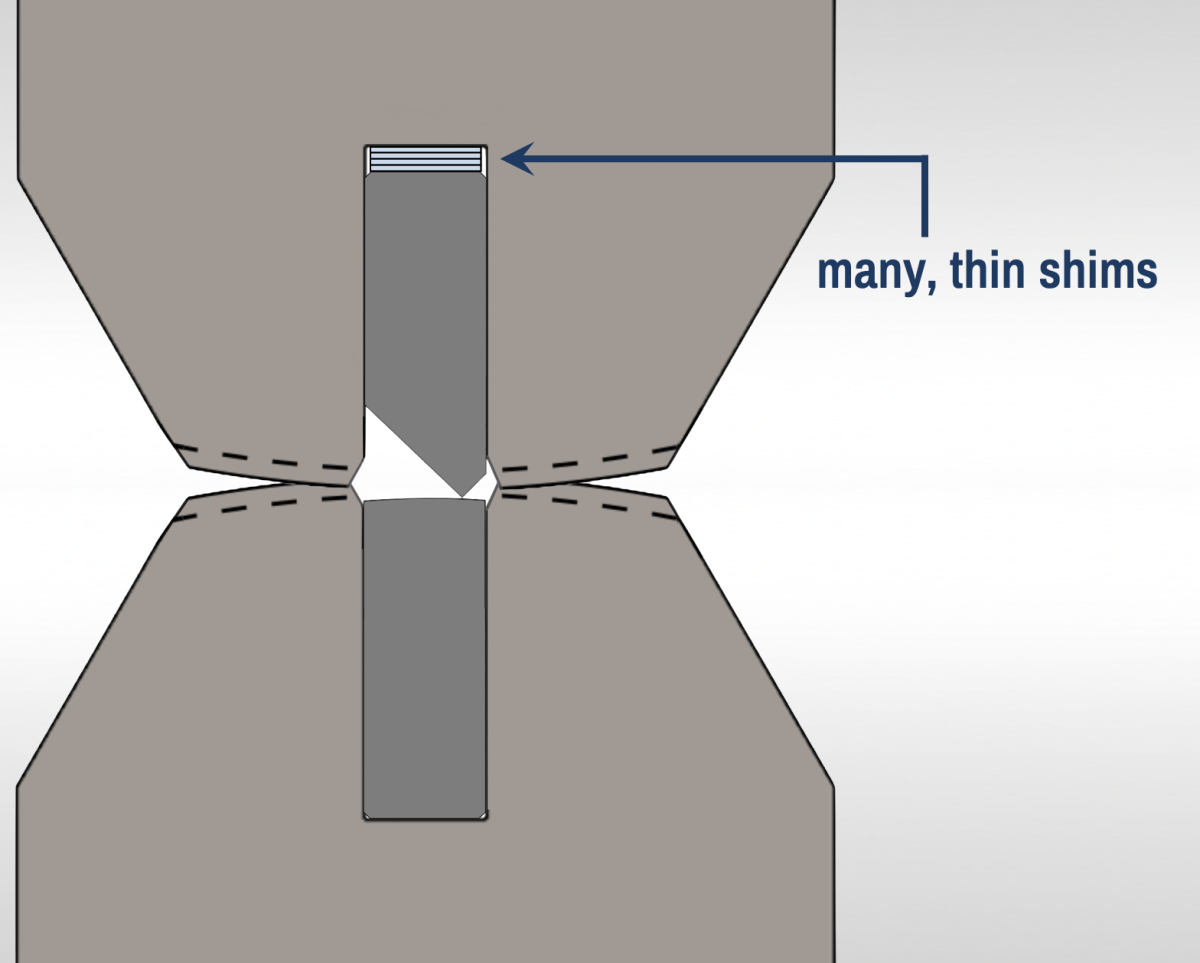
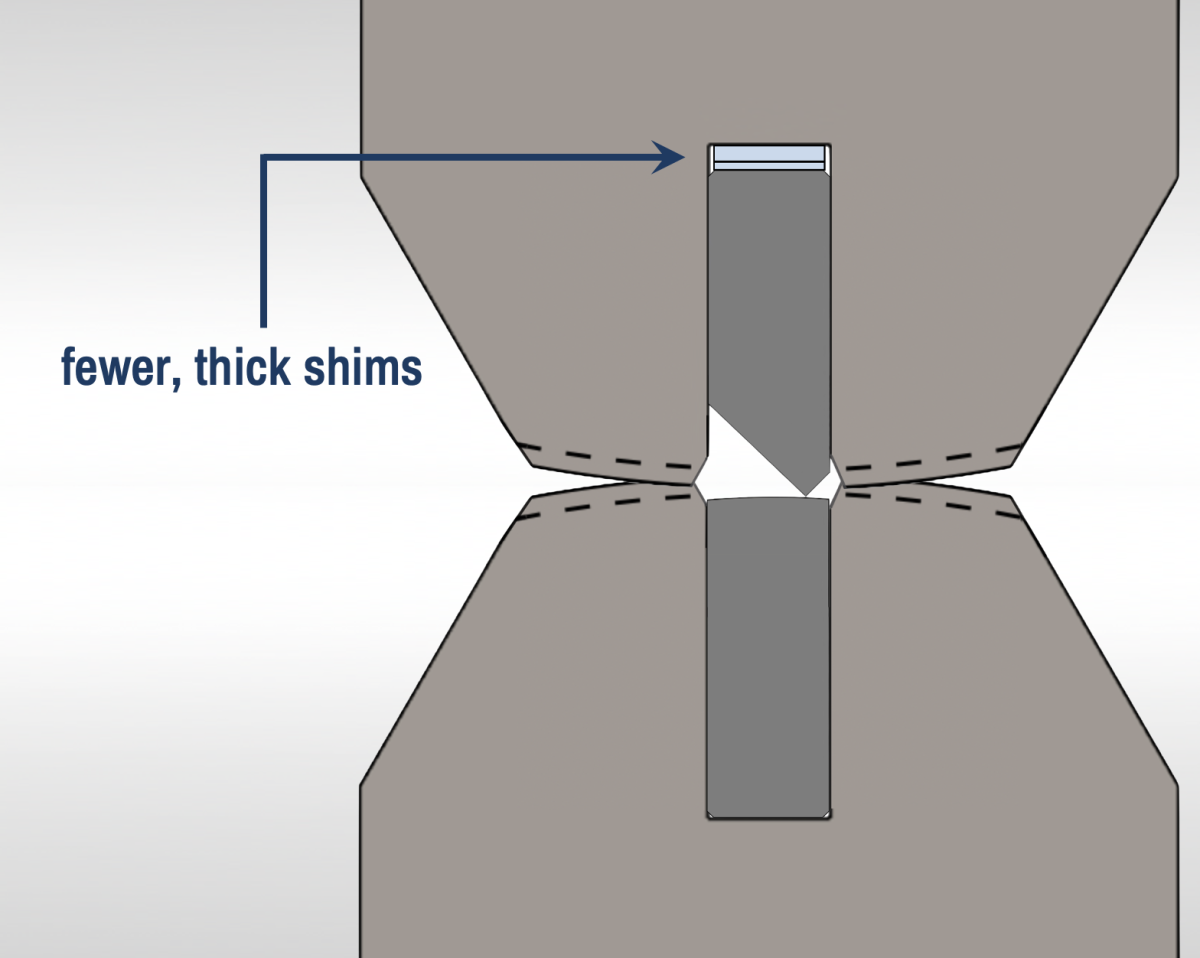
5. Many, Thin Shims Instead of Fewer, Thicker Shims
The use of many, thinner shims instead of fewer, thicker shims has failed to provide a solid seat for the knife and reduced the available cutting force.
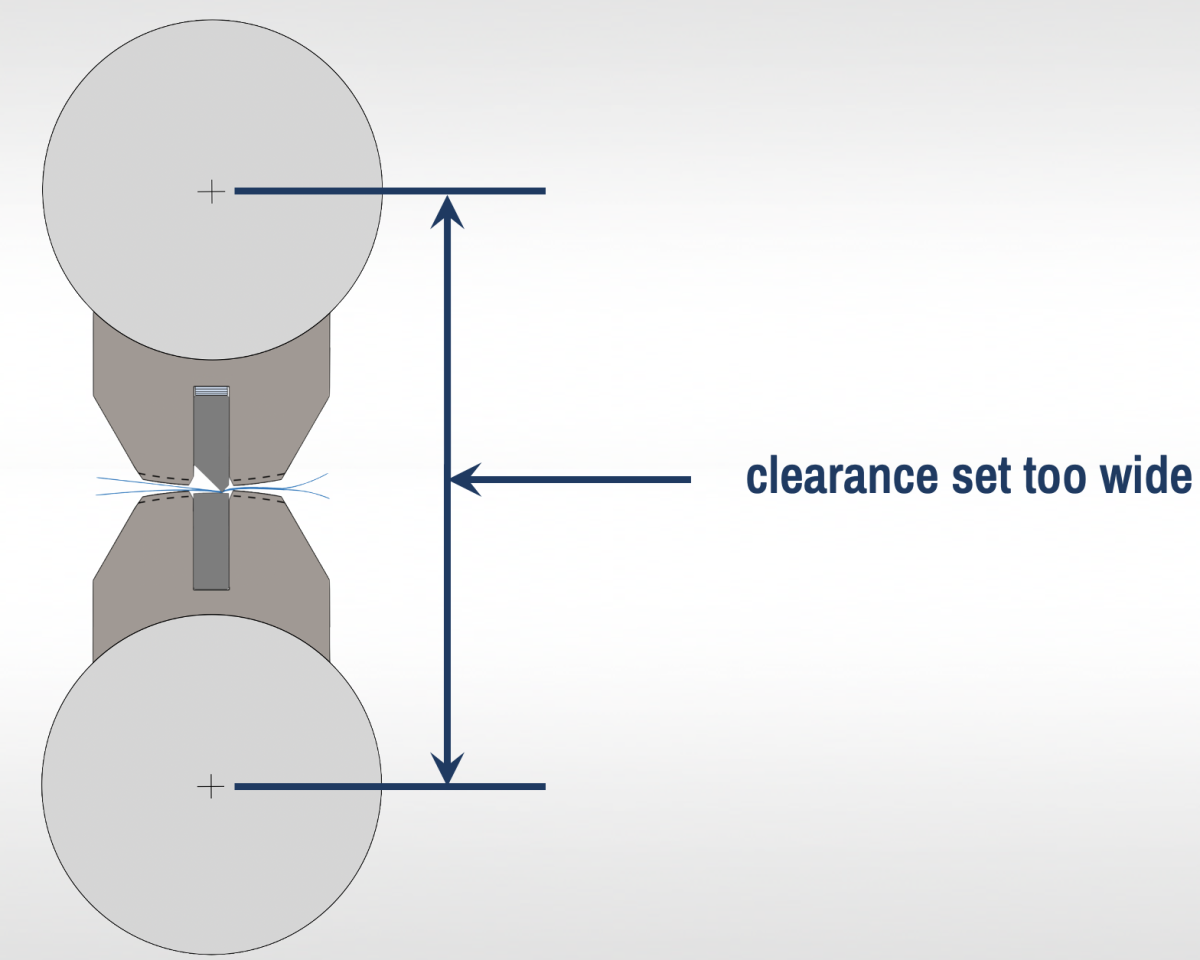
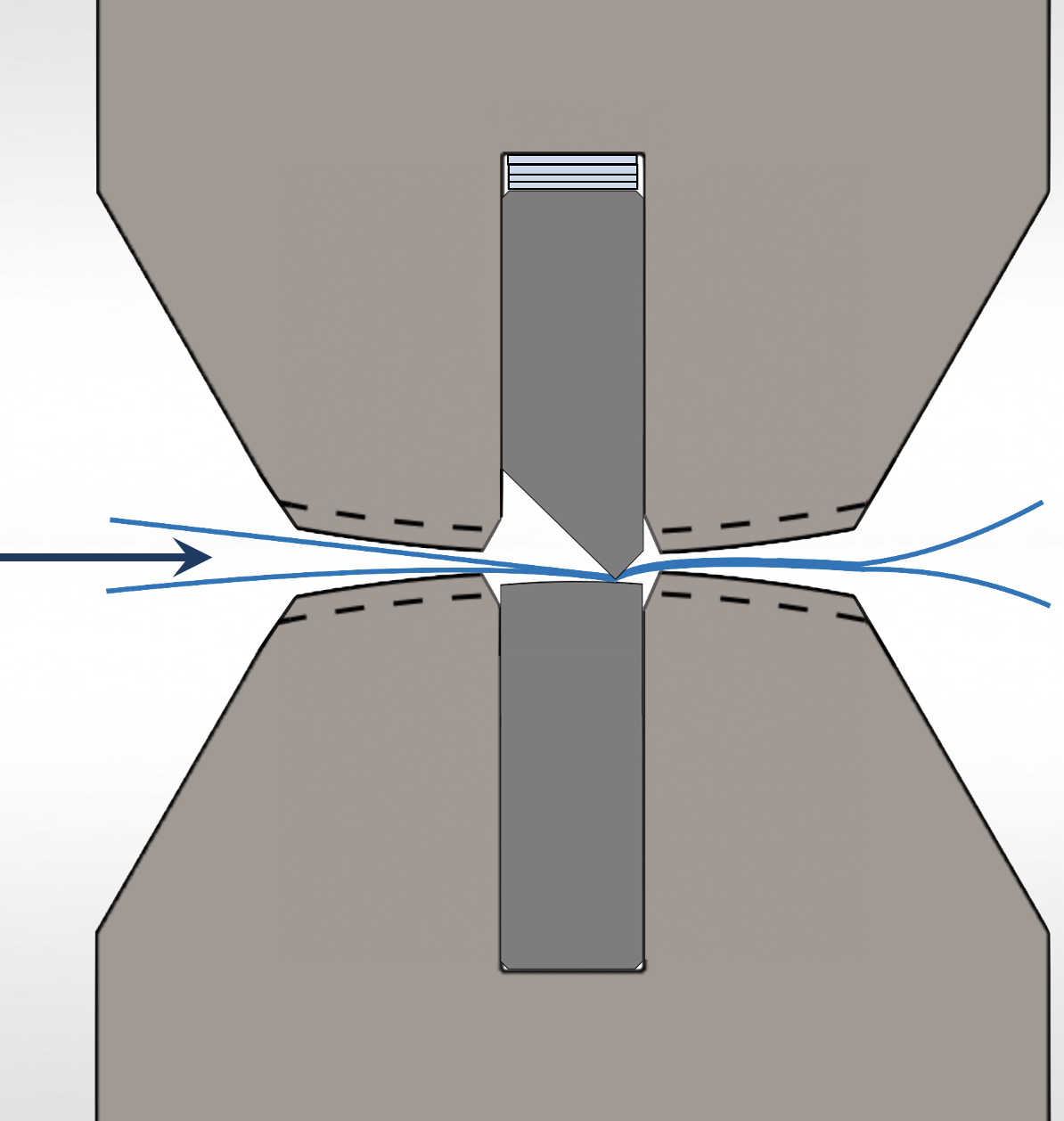
6. Clearance Set Too Wide
Clearance between the sealing jaws is set too wide, effectively deepening the slots in the jaws and requiring extra shims for the knife to cut.
If the clearance adjustment is incorrect, sealing problems will also be present.
7. Resharpened Knives and/or Anvils
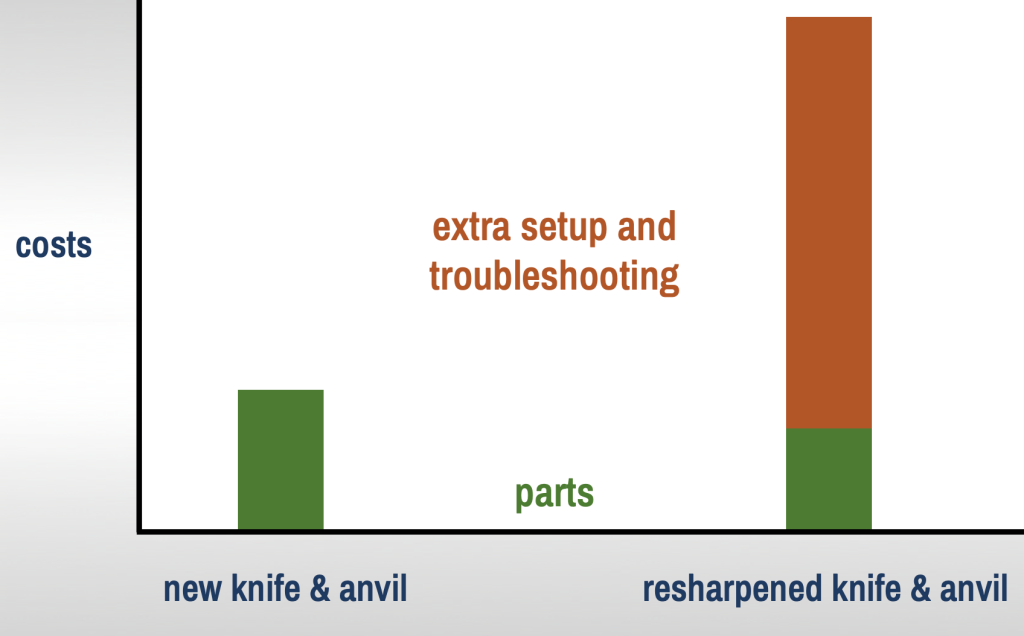
Knives and/or anvils have been resharpened and need excess shim to compensate for their reduced height. Greener does not recommend resharpening knives and anvils unless it’s an emergency, where a new knife and anvil are not available to keep the machine running.
The price difference between a new and a resharpened knife is minuscule compared to the thousands of dollars in extra downtime costs required to setup and troubleshoot a resharpened knife.
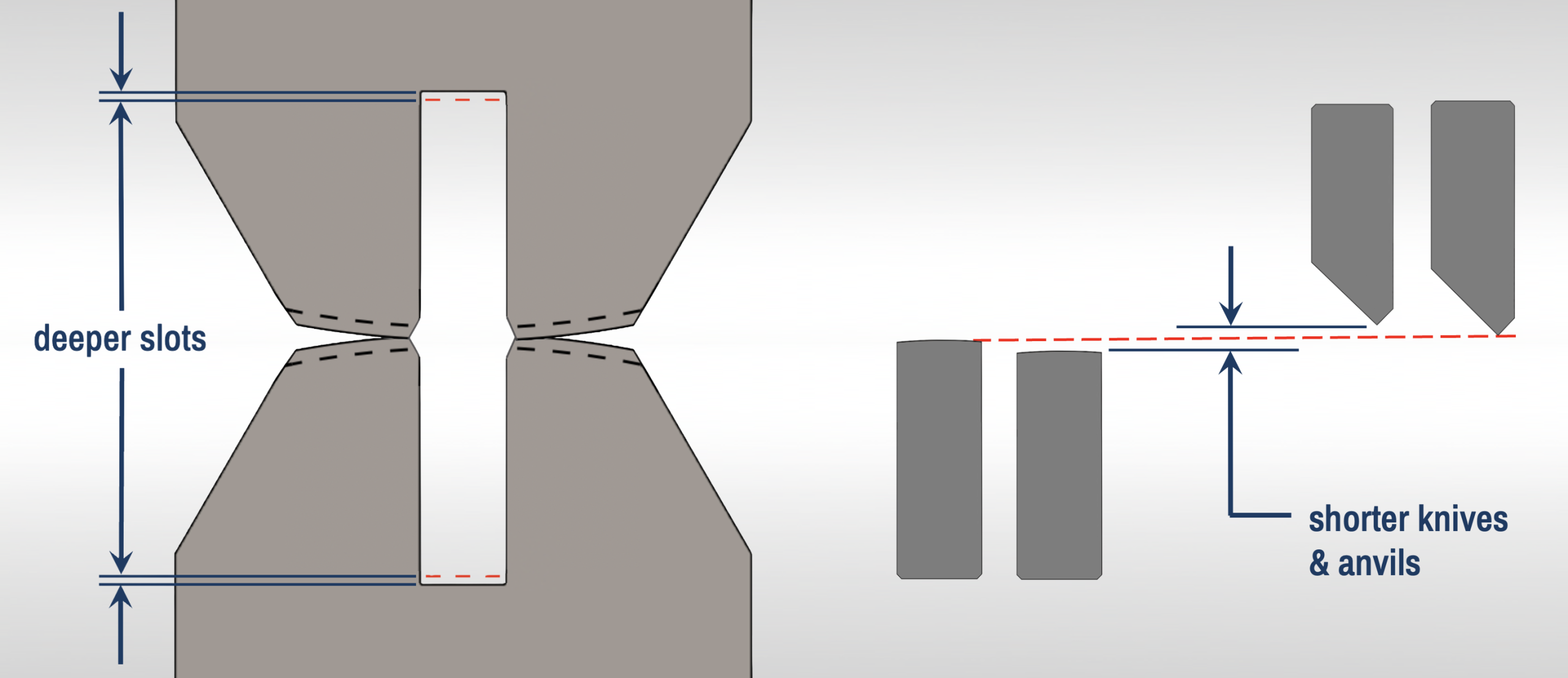
8. Sealing Jaws With Deeper Slots – Shorter Knives and Anvils
Sealing jaws with deeper slots and/or knives and anvils with shorter heights are provided by some machine manufacturers and part suppliers. With these components, more than fifteen thousandths of an inch, or .38 millimeters, of shims may be needed to get a knife to cut—sometimes significantly more.
We don’t typically recommend shimming a new anvil. But if the anvil sits below the root of the sealing jaw serrations, it should be shimmed up to the mid-point of the serrations to reduce the shim thickness under the knife.
If the anvil sits too deeply, the knife will need to protrude above the tops of the serrations. The package is not supported as it spans between the edges of the anvil slot and can be fractured when the knife pushes it downward to meet the anvil.
Precise knife adjustment on your flow wrappers and rotary vertical baggers plays a vital role in optimizing package quality and productivity.
If you’d like input with establishing knife setup procedures, training, or troubleshooting chronic cutting problems, contact Greener Corporation. We provide integrated parts and technical services worldwide.
Tags
Knives and Anvils
Setup and Adjustment
Troubleshooting
Related Posts
NEW, Expanded Resources to Troubleshoot Problems, Run Material Trials, and Train Your Team